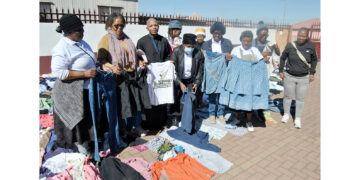










or many pensioners, retirement savings intended to secure their future are instead being used to rescue financially strained children.
Retirement was once expected to mark the beginning of financial freedom. Today, for many South Africans, it is becoming something quite different. As household budgets tighten and economic pressures intensify, a growing number of pensioners are using retirement income intended to sustain their own futures to support adult children through their financial emergencies. The result is a new retirement reality, one where retirees are not only financing their own later years but increasingly acting as the financial safety net for the next generation.
Whether it is helping an adult child recover from a financial setback, contributing to a grandchild’s education, or stepping in when household finances come under pressure, many retirees are finding themselves at the centre of their family’s financial resilience. What was once expected to be a period of greater financial freedom is increasingly becoming a time of continued financial responsibility, with retirement income often serving as a critical safety net for multiple generations.
This reality is reflected in the FNB Retirement Insights Survey 2026: Understanding South Africans’ Retirement Preparedness, which identified breaking the cycle of dependency as one of the key themes shaping retirement outcomes in South Africa. While many South Africans aspire to retire without becoming financially dependent on their children, the survey reveals a more nuanced challenge: retirees themselves often continue to provide financial support to family members long after they have left the workforce.
As economic pressures persist and financial recovery becomes more difficult for younger generations, retirement is increasingly being redefined not as the end of financial obligations, but as a new phase of multigenerational financial support.
According to Ester Ochse, Product Head of Integrated Advice at FNB, retirement is increasingly colliding with the broader economic realities facing many South African households. A uniquely prevalent reality is the expectation that those who are financially stable in their family will help carry those who are not.
“Supporting family members is deeply embedded in South Africa’s social fabric, and for many retirees, helping loved ones through difficult periods is not a financial decision, it’s a personal one,” says Ochse.
“The challenge, however, is that what begins as temporary support can gradually become a long-term financial obligation. When retirees repeatedly draw on income and savings intended to fund their own future, they risk compromising their financial security, reducing their ability to absorb unexpected expenses, and placing additional pressure on resources that may need to last for decades. Striking a balance between supporting loved ones and protecting one’s own retirement outcomes is becoming one of the most important financial challenges facing retirees today.”
The survey highlights the financial pressures many South Africans continue to face, with unexpected emergencies and rising living costs remaining among the biggest barriers to financial progress.
Samukelo Zwane, Head of Products at FNB Wealth and Investments concurs Ochse with saying our FNB Retirement Insights Survey shows that rising costs and financial uncertainty are affecting entire families, not just working South Africans. This is leaving many retirees with difficult decisions about whether to safeguard the retirement savings they have spent decades building or use those funds to support loved ones facing financial hardship.
For retirees, this often creates a difficult dilemma. Do you preserve the nest egg you’ve spent decades building, or do you use it to help someone you love? The answer is rarely straightforward.
Unlike previous generations, many retirees today are supporting family members against a backdrop of persistent economic uncertainty. In some households, a pension is no longer viewed solely as retirement income. It has become a source of stability in an otherwise uncertain financial environment.
Yet retirement planning was never designed around the assumption of supporting multiple generations. Healthcare costs increase with age and retirement income needs to stretch further than ever before. Savings that are depleted today may not be easily replaced tomorrow. This doesn’t mean retirees shouldn’t help. Rather, it highlights the importance of helping in a way that is both meaningful and sustainable.
Before providing financial assistance, retirees should consider two important questions:
- Can I afford to help without compromising my own future needs?
Protecting retirement funding, healthcare provision and emergency savings should remain a priority, even when helping loved ones.
- Is this support solving the challenge or simply delaying it?
The most effective assistance often creates a path back to financial independence rather than an ongoing reliance on support. Having a clear understanding of the long-term impact of financial decisions becomes increasingly important during retirement.
Access to trusted financial guidance can also help retirees navigate these decisions with greater confidence. The reality is that retirement planning today is no longer only about the retiree. It increasingly needs to account for the family members who may depend on them and the financial obligations that can emerge long after retirement begins.
Through solutions such as My Advisor on the FNB App, customers can access personalised financial guidance to help navigate major financial decisions, while products such as the FNB Retirement Annuity remain an important foundation for building and preserving long-term retirement security.
“Many people enter retirement expecting their financial responsibilities to gradually ease after years of disciplined saving and planning. Yet increasingly, retirees are finding themselves supporting not only their own needs, but those of children, grandchildren and extended family members as well,” concludes Ochse.
“The reality is that retirement security and family support do not have to be mutually exclusive. The key is to balance generosity with sustainability. Supporting loved ones through difficult times is an important part of who we are, but it should not come at the expense of the financial future you’ve spent a lifetime building. With careful planning, open family conversations and the right financial guidance, retirees can continue to support those they care about while protecting their own long-term financial wellbeing.”
Apiwe Mjambane
Soweto Sunrise News